
Get a Free Quote
 4008-693-698
中文版
 4008-693-698
中文版
 2026-10-27 09:33:02
Polyurethane acoustic underlays on the market may seem similar, yet they differ drastically. Though all labelled “polyurethane acoustic underlay”, some are engineered for underfloor heating systems, some for wet mortar installation, some rely on geometric interfaces for acoustic scattering, and others depend on material stiffness ratio for vibration isolation. They vary greatly in base substrate adaptability, construction compatibility and interfacial bonding methods. If the underlying differentiation logic is not clarified during selection, engineering issues such as “the purchased underlay fails to insulate noise” or “delamination and hollowing between the underlay and mortar layer” are highly likely to occur. Built on the polyurethane elastomer platform, Guangdong Weibote Acoustics has developed two product lines: polyurethane microporous damping acoustic underlays and PU acoustic underlays, which provide differentiated solutions for different construction interfaces and working conditions. Starting from the root of product differentiation, this article analyzes their core advantages and environmental performance point by point.
I. Why Products Are Differentiated: Where Do the Differences of Polyurethane Acoustic Underlays Come From?
The performance of a polyurethane acoustic underlay is essentially determined by three variables: the inherent damping and stiffness properties of the material, the geometric structure of the interface, and the bonding method with the upper and lower structural layers. A change in any of these three variables will shift the applicable working conditions of the product.
From the material perspective, by adjusting the ratio of soft and hard segments, cell structure and density, polyurethane elastomers can achieve performance ranging from low‑stiffness high‑damping to thin‑profile high‑load‑bearing types. This determines whether the product is oriented toward “flexible conformity” or “rigid load bearing”. From the interface perspective, whether the surface is flat, profiled/wavy or laminated with non‑woven fabric directly affects its conformity to the base substrate, the propagation path of vibration waves, and anchoring reliability with the mortar layer. From the working condition perspective, dry laying, wet laying and floating floors for underfloor heating impose distinct requirements on the thermal performance, interfacial bonding strength and construction tolerance of the underlay.
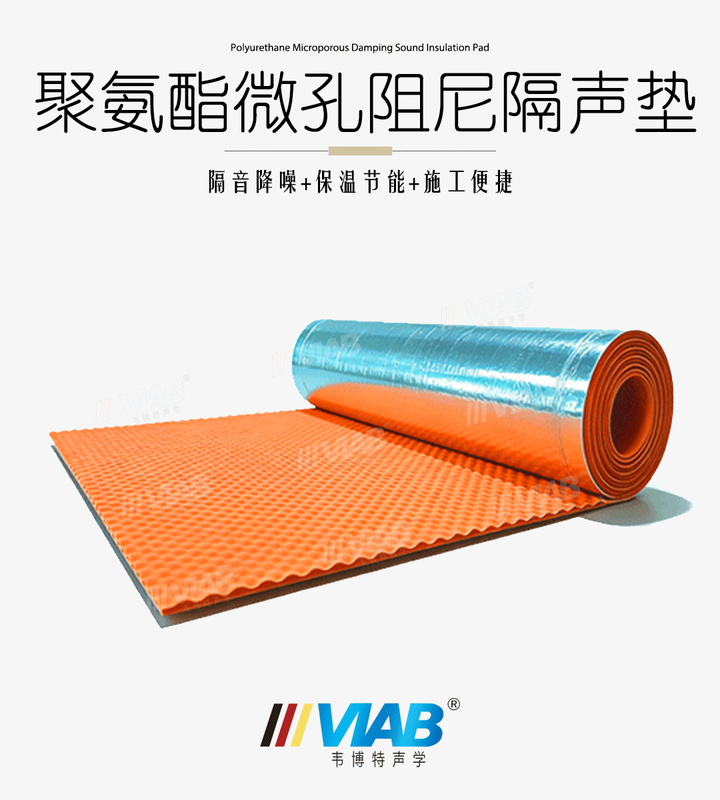
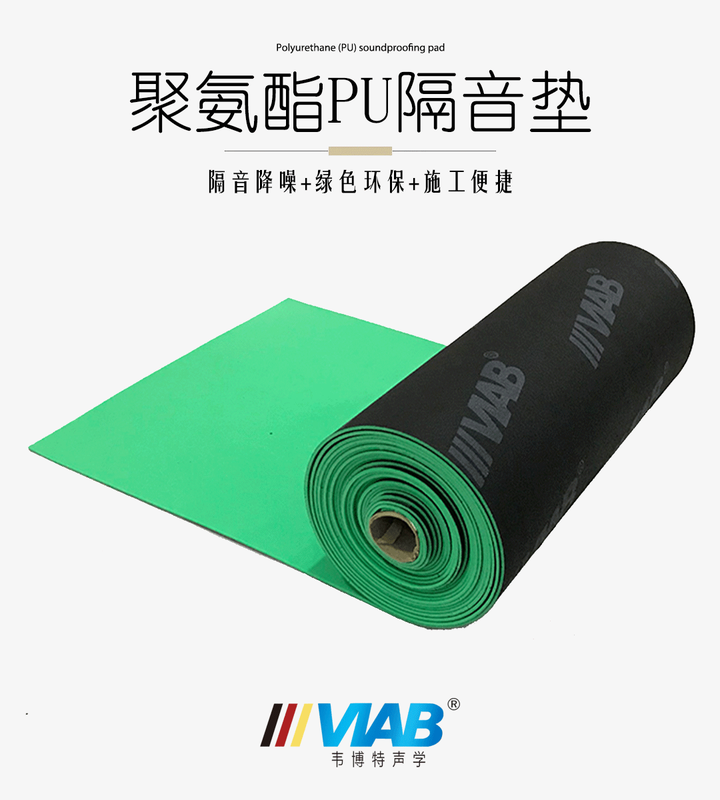
Weibote’s two product lines adopt different trade‑offs among the above variables: the microporous damping underlay adopts a wavy interface laminated with aluminium film to address the combined requirements of “uneven base substrate + underfloor heating conditions”; the PU acoustic underlay uses non‑woven lamination and low stiffness ratio to meet the requirements of “wet mortar installation + efficient vibration isolation”. Only by understanding this differentiation logic can we recognize the engineering value of their respective advantages.
II. Core Advantages of Polyurethane Microporous Damping Acoustic Underlay

Environmental concerns over polyurethane materials used indoors mainly focus on volatile organic compound emissions and formulation safety. Weibote polyurethane acoustic underlays adopt a low‑VOC, halogen‑free formulation. Formaldehyde and TVOC emissions are controlled below compliance thresholds for interior building materials, reducing the risk of indoor air pollution starting from raw materials. For occupied spaces with long‑term occupancy such as residences, hotels and schools, this translates to safe emissions and an indoor‑environment‑friendly material. Combined with ageing resistance and water resistance, the product maintains stable performance over its service life, cutting replacement frequency and waste generation, which aligns with green building requirements for whole‑life‑cycle environmental load control. Regarding fire performance, matching grades are available according to project fire rating requirements, to be selected by designers in compliance with applicable codes.
The differentiation between Weibote Acoustics’ two polyurethane acoustic underlay product lines is essentially a refined solution addressing the trade‑off triangle of acoustic performance – construction interface – thermal requirements in floating floor engineering. The microporous damping underlay excels through wavy‑interface scattering and aluminium‑film thermal reflection, suited for underfloor heating and sites with challenging substrate conditions. The PU acoustic underlay centres on non‑woven anchorage and low‑stiffness‑ratio vibration isolation to meet reliability demands for wet mortar systems. Both share the damping dissipation mechanism of polyurethane elastomers and the same low‑emission environmental standard, yet each adopts targeted design choices at the interface level. For designers and contractors, understanding this differentiation logic carries greater engineering value than simply comparing sound reduction figures. The ultimate performance potential of an acoustic underlay can only be realised when paired with the correct floor assembly.

Contact Person: Manager He 13556110648
Address: Room 5022, No. 228 Qiaotou Street, Haizhu District, Guangzhou
 Scan QR Code for WeChat Consultation